Wednesday, 19 August 2015

ALIENS ARRIVE IN THE EAST END OF LONDON


“Aliens arrive in the East End”.

“Space Ship lands on the roof of  six storey building

in Copperfield Road.  London E.1.”
 
 
From the high ground at the blocked off end of Copperfield Road there is a clear view of  Canary Wharf, the Barclays Bank headquarters which forms the it’s architectural centrepiece like some massive monolith reaching high into the sky. 
                                                      
A short cul de sac sandwiched between Mile End Park and the Regents Canal, Copperfield Road was a hub of local commerce more than 100 years ago when the site of Canary Wharf was a not very salubrious part of the old London Docklands, but it has over the years had a somewhat chequered history.  The original red brick building, erected in the late 19th century as one of the largest free schools in London still stands on it’s southern corner and is now the home of the Ragged School Museum, a regular tourist attraction for adults and children alike. 


An assortment of factories built mostly during the 20th century lined the remainder of the road, including that of Conway Stewart, the world renown manufacturers of top quality fountain pens.  This was the scene of an audacious gold robbery in the 1950’s and was later on linked to a most vicious gangland murder.  The whole area that lined the canal became run down in the early 1970’s with most of the redundant and now empty buildings in Copperfield Road becoming, decrepit, dangerous  and rat infested while vagrants and no-goods roamed the old park after dark.  


Things took a turn for the better in the mid 1990’s when the massive regeneration plans for the Ocean Estate and surrounding area including the park and canal took off and a gigantic multi million pound clean up operation began.   The old factories were gradually demolished and posh blocks of flats with roof top gardens and modern offices sprung up in their place. 


The road was once again in the news at the start of 2014  when a space ship landed high above the canal on the roof of Matts Gallery at number 44 . Not a real one of course but sufficiently realistic  to hit the headlines -  a very convincing full size model and an incredible piece of installation art by Craig Barnes called Revolver 11.  And there the alien transporter remained for the rest of the year, passers by craning their neck to look up at it before it went off to Central St Martins School of Art and Design at the start of 2015.
                                              

Matt’s Gallery, founded by Robin Klassnik and named after his dog ‘Matt’ moved into one of the older buildings in 1979 and began life as a place to support artists, with the space and time to take risks. The purpose then was to test their limits and surprise even their own intentions - and it still does - providing the best conditions for experiencing art and continually challenging audiences.                                     

Unusual as it undoubtedly is, primarily stocking hard to find books by small independent publishers, this is much, much more than just your regular bookshop.   There’s also a gallery space showing a range of modern and contemporary pictures, two large installation areas, the owners workshops and a comfortable friendly looking reception area complete with genuine 1950’s juke box, all overseen by assistant director Laura Hensser, who invited me back to the late night event taking place that evening. 

It was a beautiful warm summer evening and as I approached from the park I could see a huge crowd in the distance completely filling the road and pavements outside the entrance  to the venue with literally dozens of bicycles lining the railings of  Mile End park.  As I got nearer I noticed the smoke from a roadside barbeque and caught the tempting aroma of cooking meat.

Of all ages, from babes in arms to old age pensioners it was a smart happy throng,  including lots of good looking men and pretty women some with fabulous hair styles - and even the odd hippy looked as if he/she had made a special effort.   My first stop once inside the building was the main performance area, but I couldn’t even get through the doors as about 100 people stood shoulder to shoulder listening to the music.   I think it was some kind of Cello concert and there was a second recital later, but by then I had got involved in something else.

An electronic music event was taking place in the second performance room which was now gradually filling up as more people came in from outside.   Every player  here was unusual to say the least, some with outrageous dress styles based on aliens of one kind or another, others practically impossible to describe.

I always try to find the most unusual exhibit to focus on at these events and it didn’t take me long to discover the installation by Keith Harrison – an absolutely realistic  looking full size set of drums which he had made from ceramics during the day and was now undergoing its finishing touches before his 9pm finale.  


Keith is pretty well known in this niche section of the art world, his last feature “Napalm Death” at Bexhill almost setting fire to the venue and I believe was the event that brought him to the attention of The Tate Modern.  Everyone that knew him and now being held back at a safe distance by stewards were holding their breath, especially when he donned protective glasses as the witching hour approached.  

Music began to play, quietly at first then gradually increasing in volume as Keith fiddled about with bits of wire and some kind of generator. Then suddenly there was an enormous explosion , the tops of each drum split open and flew into the air showering everyone in the room with thousands of tiny pieces of silver foil.  Keith had yet to name this latest piece so I suggested “ Orgasm on Ceramic Drums”.  Watch this space !  The place was still throbbing as I finished my beer and left, picking up just outside the doors one of the most delicious burgers I have ever tasted  and having enjoyed a most interesting and entertaining evening.

 Matts Bookshop is a fabulous place with a very special kind of ambience , which is open Wednesdays to Sundays from 12- 6pm where there is generally always something different going on.


BACK TO THE FUTURE


BACK TO THE FUTURE.

Apologies to anyone that has wasted their time looking up my blog over the last six months or so as nothing new has been added – but  I do have a good enough excuse. 


Last year following a routine blood test,  right out of the blue  I was diagnosed with a rather unusual form of bone cancer.  Up until then I had been perfectly healthy.  My consultant acted quickly and within two weeks of the diagnosis I started a course of chemotherapy at Barts Hospital.  The treatment continued intermittently until a month or so ago and  last week I was told my cancer was in remission.  The chemo worked well  (fingers crossed) but during the process the side effects  almost killed me and I am sure that some of the poisons are still in my system.   I am still a bit tired and need to get back some of the weight I lost, but apart from a few mobility problems I am pretty much back on track.  


In all this I am very fortunate at this traumatic time of my life to have been looked after by the dedicated staff and highly skilled consultants of  St Bartholomew’s Hospital, not only the oldest hospital in the UK but the oldest in the whole of Europe. 


It was founded in 1123 by a man  called Rahere who was probably a clerk in the employ of Henry 1st.  After the tragic deaths of Henry’s wife and children Rahere undertook a pilgrimage to Rome where he fell ill with malaria.  He prayed for recovery and promised that if his prayers were answered he would build a hospital for the sick poor in London - and upon his return he did just that.
                                              

But St. Bartholomew’s is much more than just a hospital.  A landmark in the city of London its also a church (the ancient church of St Bartholemew  the Less) , a museum , an archive for the records of many other hospitals institutions and charities and a set of buildings of great architectural and cultural interest. 


The North wing constructed in 1730 contains The Great Hall , a magnificent  double-height room in baroque style reached by an equally impressive grand staircase.  On the walls and the ceiling of the staircase are two huge murals painted by William Hogarth, The Pool of Bethesda (1736) and The Good Samaritan (1737) who carried out this work free of charge as his wife had recently been a patient there .
                                          
Above the gate of the main public entrance to the hospital is a statue of King Henry V111 , the only remaining one of him that exists outside of any public building in London.


The impressive traditional stone buildings originally designed by James Gibbs in the 1730s, surround a central paved courtyard with a  fountain and small landscaped gardens.     One of these, the George V building recently underwent a remarkable transformation it’s exterior facade cleverly retained whilst  behind it hidden from public gaze  a brand new ultra modern glass and steel interior rises into the sky.  The inside of this new eight storey structure  looks and feels more like a expensive modern hotel than a hospital , but  now -fortunately for me - contains the very latest in medical technology including a centre of excellence in cancer care.
                                                   

From my treatment bed ,  its deep purple upholstery a cross between high tech and modern luxury style I could see through the window the glistening dome of nearby St Pauls Cathedral, only one hundred yards or so away.   A  wonderful sight which cannot help but aid in the process of recovery - and now I must get back on track and look to the future. 


Saturday, 22 March 2014

THE KISS.


Probably the most likely image to come to mind when seeing the words THE KISS as far as art is concerned is the huge stone sculpture by the renown French sculptor Auguste Rodin.   Apart from the fact that one has to admire the sheer physical ability of carving such a huge piece stone ,having  seen it many times and touched it too I don’t myself see it as a thing of beauty – or even truly representing the erotic pleasure of the kiss. 

 
 A more modern interpretation of a vaguely similar pose by Jacob Epstein is without doubt also an incredible piece of art, but to me personally still doesn’t really characterise the erotic reality of two persons engaged in a naked caress.


The posture of Rodin’s sculpture has been copied many times since its inception, by various artists and commercial enterprises and sold practically all over the world.   Some are good, some not so good and some totally indifferent in both artistry and quality.


If I had the opportunity to choose any one of them no matter what the cost, I would take the one that has sat on top of a chest of drawers in my bedroom since it was bought for me by my lover almost 20 years ago.  We have often tried -without much success -to capture the pose ourselves  in various photographic sessions over the years  – however lack of achievement did not lessen  the pleasurable experience.


There are of course various kinds of kissing.   A kiss on the cheek is no more than a sign of friendship - a kiss on the mouth a sign of familial love.  Parents kiss their children – children kiss their (older) parents .    A kiss on the mouth between adult men and women can also indicate a closer kind of friendship, not necessarily sexual.  In some countries heterosexual men/women  may also kiss family members or very close friends on the mouth without any sexual motivation.   

A sexual kiss is very different – for this there needs to be no personal connection at all.  It can be between man and wife, lovers, casual acquaintances or even complete strangers.


Within seconds of a sexual kiss the brain makes an almost immediate connection between the lips of each individual to their own genital regions.  If this does not happen almost straight away the kiss has little chance of lasting satisfaction.


Kissing is a universal form of communication because it is a natural human instinct. Anthropologists believe that kissing originated as a derivative of pre-mastication –chewing food until it was soft and then transferring it into the baby’s mouth. 

Modern sex play often involves passing erotically charged foods – sweets, oysters, strawberries and etc; and drink especially from lovers – mouth to mouth. So there might be some truth in this theory.

 
Ancient Chinese erotica links the upper lip of a woman’s mouth to her clitoris and the lower lip of a man to his penis.  Their manuals of sex instructed the woman to run the tip of the tongue along the mans lips and then gently suck his upper and lower lips individually.   Sounds good to me.

Philemamania is a constant craving for kissing.

Collette. 

Just about the most unusual and in many ways very erotic description of A  (sexual) KISS that I have ever come across is from a story entitled la Vagabonde,  a part autobiographical work – written in 1908 by the French writer, author and enfant terrible known as Collette. The hero of the novel was  based on her real life husband  Henri Gauthier  Villars, known as Willy .

Sidonie – Gabrielle Collette , born in 1873 in Burgundy is recognised as being one of the great writers of modern times and although she is often associated with immorality and depravity , dancing in the nude, lesbian adventures and other depravity – shocking behaviour even for the times she lived in – she was in fact a deeply moral and truly liberated woman. 

 
“I move my head imperceptibly because of his moustache, which brushes against my nostrils with a scent of vanilla and honeyed tobacco.  Oh! .... Suddenly my mouth, in spite of itself opened up  as irresistibly as a ripe plum splits in the sun.

And once more is borne that excruciating pain that spreads from my lips all the way down to my flanks, to my knees, that swelling as of a wound that wants to open once more and overflow – the voluptuous pleasure I had forgotten - his mouth tastes of mine now and has the faint scent of my powder.  

Experienced as it I can feel that it is trying to invent something new, to vary the caress still further. But already I am bold enough to indicate my preference for a long, drowsy kiss that is almost motionless – the slow crushing one against the other of two flowers in which nothing vibrates but the palpitation of two coupled pistils.”


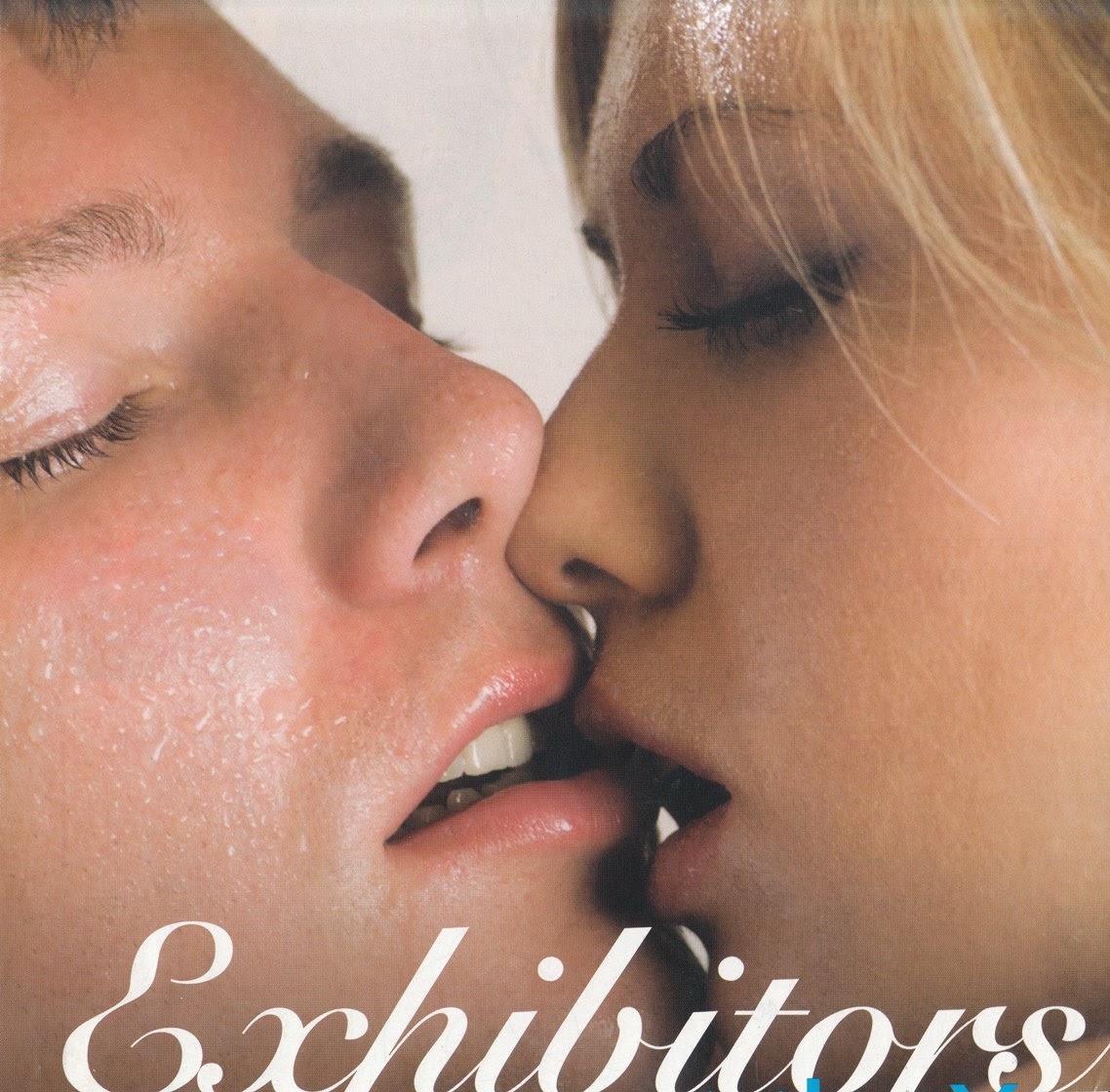
The Kiss as a specific did not make much of an appearance in either ancient or modern art, but has more than made up for it in recent times , mainly used in photographic images in the promotion of just about every kind of product under the sun. 


even old people love to kiss.

an artistic kiss
 

a multiple kiss-in

It also features in modern erotica in many instances providing a useful  separation between this more civilised genre and the crudeness of the vast majority of pornography.